Presentation | Workshops
Technical Coordination
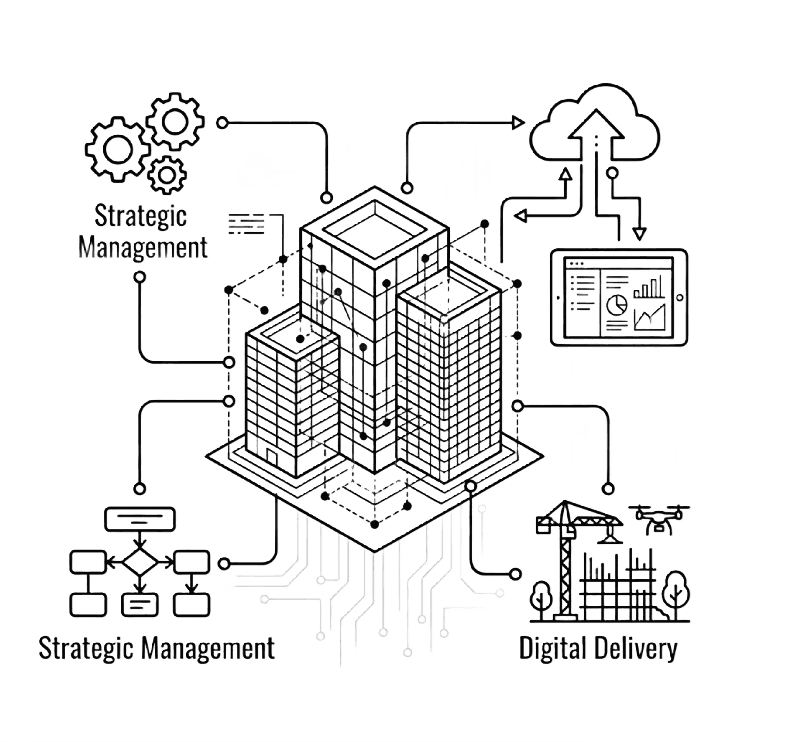
Effective digital delivery relies as much on human alignment as it does on technical precision. As an architect with a PhD-level background in spatial-temporal analysis, I bridge the gap between complex engineering data and executive decision-making. This page showcases my leadership in facilitating multidisciplinary workshops for giga-projects like NEOM and RCJ, where I leverage interactive presentation tools and advanced BIM modeling to resolve constructability conflicts, ensure maintainability, and secure "Category A" status for project stakeholders.
Key Coordination Pillars:
Technical Advocacy: Translating academic and high-tech BIM concepts into clear, actionable strategies for site teams and operators.
Operational Alignment: Leading multi-day workshops with entities like ENOWA to synchronize design intent with long-term maintenance needs.
Executive Visualization: Delivering high-fidelity render videos and progress dashboards for top-management review at the highest governmental levels.
Interdisciplinary Leadership: Managing complex reviews and information audits to ensure full compliance with Digital Twin and ISO standards.
The defense of a PhD thesis requires more than just technical knowledge; it requires the ability to communicate groundbreaking research with absolute clarity. For my thesis, "Developing a Model for Spatial-Temporal Analysis," I engineered a comprehensive presentation that utilized updated illustration concepts to break down the complexities of hybrid simulation. By integrating high-fidelity graphics with structured storytelling, I ensured that the sophisticated layers of my Digital Twin research were both presentable and persuasive to my audience.
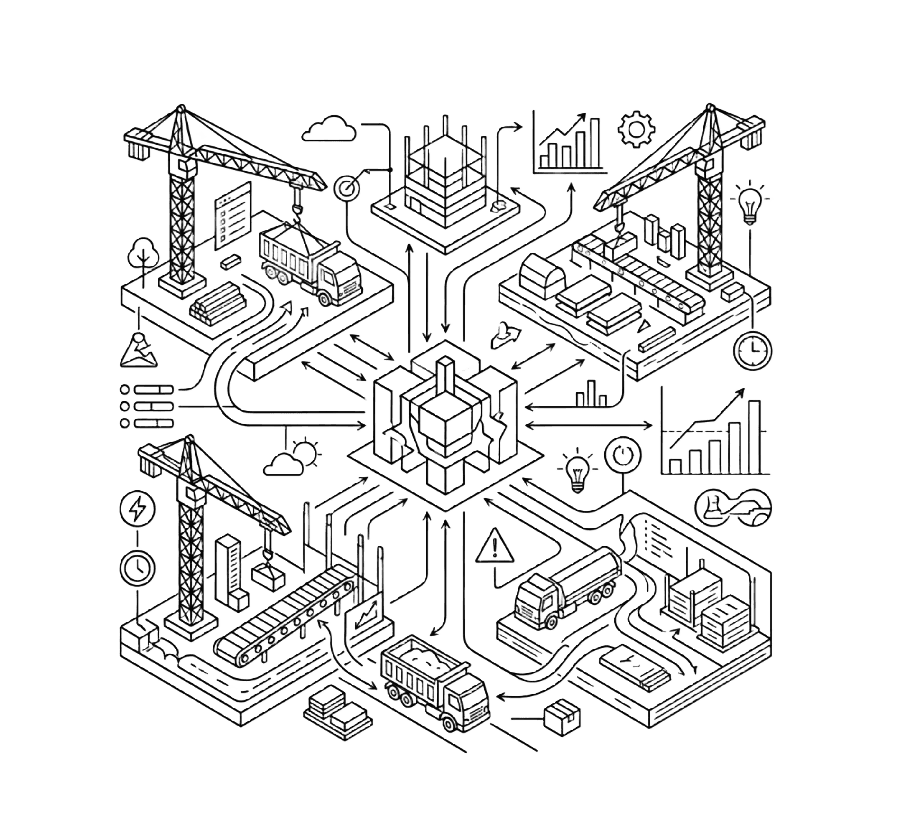
This presentation served as a proof-of-concept for my broader professional approach: the belief that no idea is too complex to be understood if the visual strategy is sound. By focusing on smooth transitions and clear, data-driven illustrations, I successfully conveyed the intersection of construction logistics and digital twins, setting the standard for how I now communicate technical strategies on giga-projects like NEOM.
Operational Readiness: Constructability & Maintainability Workshops
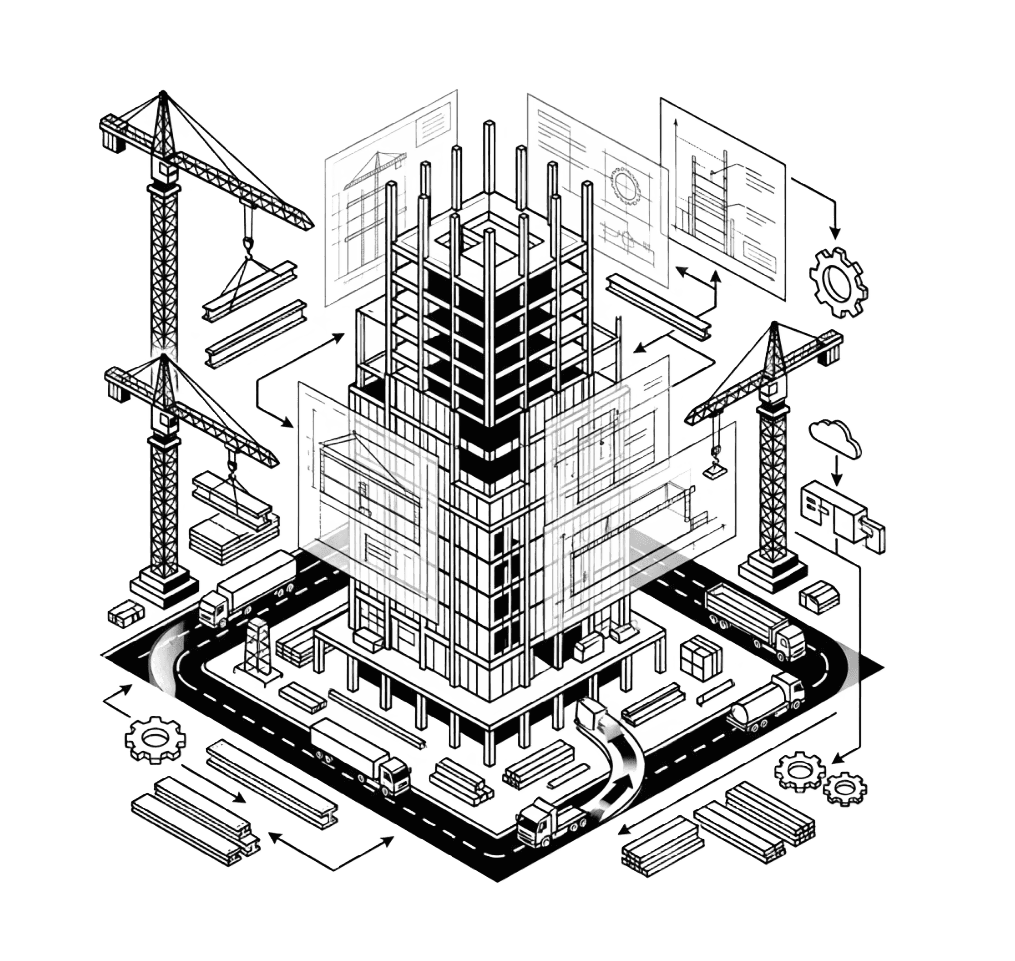
I spearheaded a series of intensive, multi-day workshops for ENOWA (NEOM), bridging the gap between ambitious design and long-term operational reality. Over two rounds of dedicated constructability sessions and seven days of maintainability reviews, I led the coordination of advanced BIM models to identify and resolve high-level spatial conflicts. By applying my architectural expertise, I provided the design and operations teams with validated solutions that ensure these giga-structures can be efficiently built and maintained throughout their lifecycle.
Technical Highlights:
Intensive Coordination: Managed 2 rounds of constructability workshops and 14 days of maintainability reviews with the NEOM operator.
Operational Advocacy: Represented the operator’s needs within the BIM environment to ensure maintenance access and lifecycle efficiency.
Proactive Problem Solving: Provided architectural suggestions and technical solutions to resolve complex interdisciplinary clashes.
High-Level Alignment: Synchronized the goals of the design team with the rigorous requirements of the ENOWA operation teams.
On the NEOM Spine Project, I managed the comprehensive accessibility, operation, and maintenance design reviews required to transition from design to physical execution. By leading high-level model audits in collaboration with the NEOM Project Management (PM) team, I ensured that all earthwork and operational requirements were perfectly coordinated within the digital twin. This proactive review process was instrumental in allowing the contractor to commence early-stage earthwork construction with a fully validated and approved technical roadmap.
RCJ Information Integration
I led the technical transformation of our interdisciplinary BIM delivery to meet the sophisticated RCJ Digital Twin (DT) Guidelines. By engineering a high-level information integration method, I ensured that every model component surpassed standard LOD requirements to achieve a new level of data utility. This rigorous commitment to information excellence resulted in EGEC being officially ranked as a Category A BIM Service Provider by the RCJ, establishing our firm as a top-tier partner for the Kingdom’s most critical industrial infrastructure.
Technical Highlights:
Category A Achievement: Secured the highest tier of BIM service provider ranking with the Royal Commission.
Interdisciplinary Integration: Managed high-level information exchange between architectural, structural, and infrastructure models.
Digital Twin Compliance: Guaranteed 100% adherence to the RCJ DT Guidelines for seamless asset lifecycle management.
The most sophisticated BIM model in the world only realizes its full value when it can be understood by project owners and stakeholders. For the NEOM Spine and the RCJ Schools program, I spearheaded the creation of high-fidelity render videos designed specifically for top-management review. By utilizing advanced rendering engines linked directly to our production BIM models, I transformed technical data into immersive visual narratives.